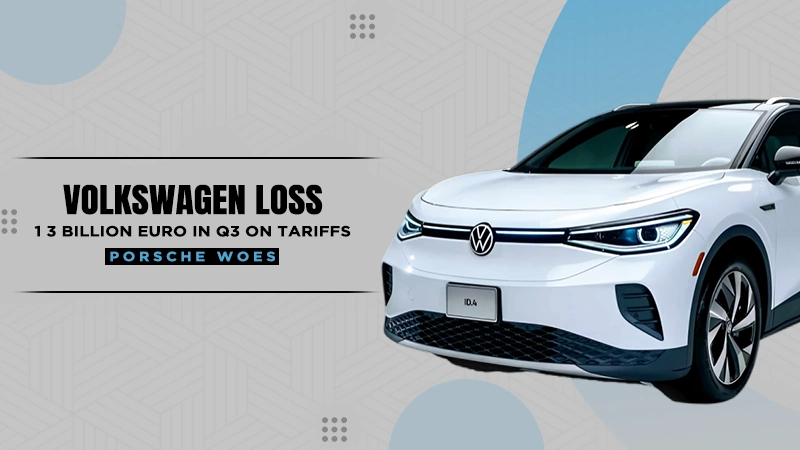
Volkswagen AG, which has reported an operating loss of €1.3 billion, was in the red in the third quarter of 2025 due to U.S. tariffs and the expensive strategic takeover at Porsche, its luxury brand, which had a huge impact on the results.
The German car maker, Volkswagen, indicated that its poor performance was mainly due to two factors. First, imports into the U.S. are going to cost up to €5 billion in 2025, which is going to affect profitability and the number of cars sold. Second, the decision of Porsche to change its electric-vehicle strategy and return the focus on gasoline and hybrid cars has resulted in write-offs and reorganization costs of several billion euros.

Volkswagen underlined that the loss was smaller than what some experts had predicted, who had suggested a loss of around €1.7 billion. This is, however, a big change compared to the same quarter last year, when the company made a profit of about €2.8 billion. Even so, the company has mentioned that the near-term outlook is uncertain because of the structural and external factors. In the wake of a pre-close conference by the German automobile maker aimed at reducing investor apprehension, the Volkswagen shares increased a few weeks ago by 1.2% but later now the situation will not be good said by management.

In particular, Volkswagen’s CFO Hans Dieter Potsch described the situation as a “mixed picture,” emphasizing the strong demand for electric vehicles in Europe but also indicating the continuing high production costs and pressure on margins. Volkswagen said it would maintain its full-year guidance, forecasting an operating margin of 2-3% and income roughly flat with the previous year. The management, however, explained that the realization of these targets depends on crucial factors: securing a sufficient supply of chips and effectively managing the impacts of tariffs and restructuring.
This situation has one long-term consequence that Volkswagen might focus on reducing costs by relocating some of its production to the U.S., thus avoiding tariff expenses on imports. Experts suggest that the company might not only look favorably at the U.S. tariff-dodging strategy but also further appeal to the changing dynamics in global trade and the location of production sites with suppliers.