Have you been witnessing gear slipping, unusual noises, poor acceleration, or even delayed or rough shifting? All of these are signs of low transmission fluid! Owners without smart on-board diagnostics systems often forget to maintain the right levels of essential car fluids. So, if you don’t know how to check transmission fluid, don’t worry!
Consider this quick guide to learn how to do it the best way, and keep the transmission fluid at the optimal level!
How to Check Transmission Fluid With a Dipstick?
It is very easy to learn how to check transmission fluid with a dipstick. With a few simple steps, you are all done. In short, the process involves:
1. Parking the car on a level surface
2. Locating the transmission fluid dipstick
3. Removing and cleaning the dipstick
4. Inserting and checking the outcome
5. Adding transmission fluid with a quality funnel
6. Putting the dipstick back into its tube
And, with the 6th step done, you complete the process. For an elaborate explanation, consider the following headings.
1. Park Your Vehicle on the Ground Level
Before you check transmission fluid, make sure that your car is parked on the ground with no incline. Next, activate the parking brake so that it won’t move during the procedure. Once that’s done, start the engine and let it get warmed up. Keep it running if your vehicle’s owner’s manual doesn’t provide a different instruction.
Note: Always check the car user manual because some automobiles need the engine off before checking the essential car fluids, including the transmission.
2. Locate the Dipstick
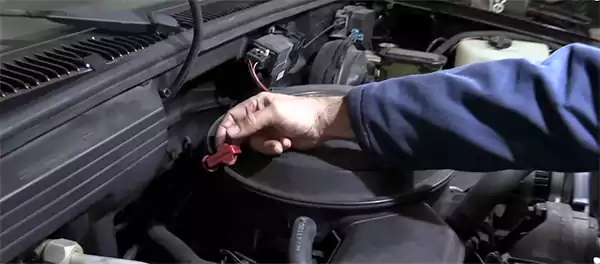
In our guide on how to check transmission fluid, the next step is finding where the transmission fluid dipstick is. Typically, you will find this tool in the engine compartment. Just search near the oil dipstick or the back of the engine. In most vehicles, it looks similar to the dipstick used to check the engine oil.
Warning: As your engine is running, proceed with caution because mindless attempts might cause skin burn or other injuries from hot fluid or car components.
3. Remove and Clean the Dipstick
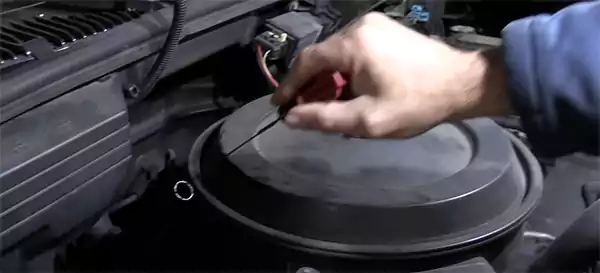
Now, take the dipstick out of its tube and wipe the tip clean. You cannot use the initial pull to check the level because it might give a false result. Only the dip-and-pull after this step counts and is recommended for an accurate reading.
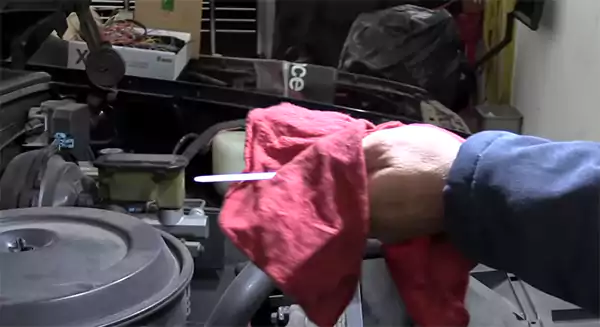
Additionally, use a clean rag or paper towel for the cleanup, as you don’t want to contaminate the tip of the transmission dipstick and transfer the unwanted particles to the transmission pan or sump—the part that contains all the transmission fluid.
Also, consider the following while you are learning how to check transmission fluid level. Make sure that the transmission fluid doesn’t drop anywhere unwanted, as it is known to create stubborn stains and patches!
So, be cautious in advance or deal with the extra work later!
4. Insert and Check the Outcome
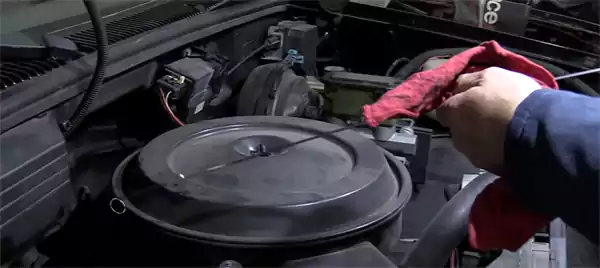
Put a clean-and-fluid-free dipstick inside the tube and make sure it goes all the way down to the sump. Hold it there for a few seconds before pulling it back. This is the most crucial step in how to check transmission fluid.
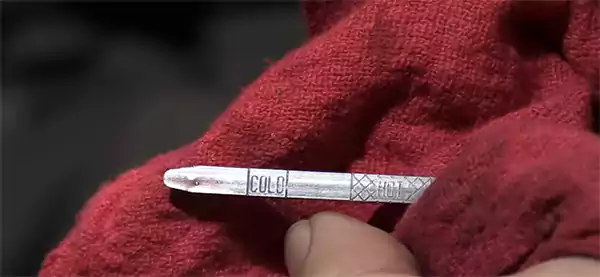
Once out, hold the dipstick’s tip or lower end up close, like in the image above. Check the result and determine the fluid level.
The “Cold” and “Hot” markings on the dipstick are for checking the transmission fluid level at different temperatures. After warming up and keeping the engine on, the reading must indicate that the fluid level is within the hot zone to be safe.
However, if it shows anywhere near the cold region (when the engine is on), it means your sump is low on the transmission fluid, and now it is time to add an appropriate amount.
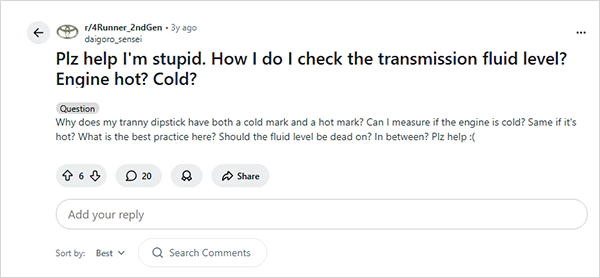
You might wonder what the logic behind cold and hot markings is, like daigoro_sensei (image above)! The cold region is an approximate indication of the fluid level when the engine is cold (or hasn’t been warmed up and is not running during the process). And, the hot zone is to check the right level of the transmission fluid with a turned-on engine after at least a 30-minute warm-up session.

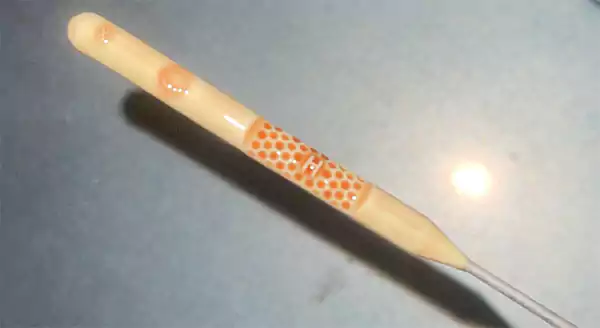
Furthermore, if you are confused like thelilsteppa with the reading (image above), take the higher region bearing H as the safe zone. Your fluid level must be anywhere within this H region. H here is for Hot.
5. Take a Funnel and Add Transmission Fluid

Once the reading is clear about a low level, take a firm funnel and add a suitable automatic transmission fluid in small quantities. Don’t pour a lot of fluid at once because it might overfill the transmission pan. It is often difficult to get the excessive level out of the system once added.
Thus, add in small increments and keep rechecking until you have reached the region of hot or warm marking. With that said, it is the 5th step in “How do I check transmission fluid?”
Tip: Don’t pour the transmission fluid into the tube directly from the bottle or container you bought from the market. Instead, use a unit-marked measuring container for mindful fluid adding.
6. Put the Dipstick Back
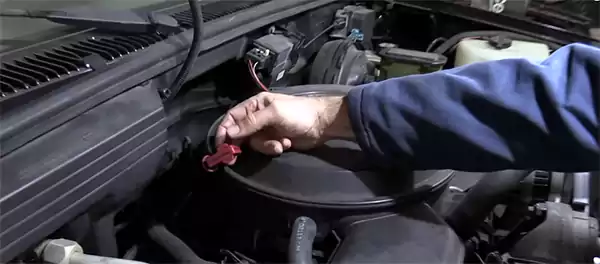
Once checking transmission fluid is checked, and you have also adjusted the fluid levels, it is time to put the dipstick back into its long tube. If you have left the stick on the floor or somewhere with dirt, don’t forget to clean its tip or the body before inserting it back into the holder. Automobiles also require good hygiene for proper functioning and long life.
That is how you check the transmission fluid level using a dipstick. It is not only that old models come with a dipstick, but many luxurious 7-seater cars as well. Other methods of checking the transmission fluid are mentioned in the following sections.
Also Read: How Much Does a Tesla Battery Replacement Cost? Updated Prices
How to Check Transmission Fluid Without a Dipstick?
If you need to learn how to check transmission fluid without a dipstick, this section is for you. There are three additional ways, as mentioned below, that everyone can try if the vehicle shows compatibility.
- Checking the level with a suitable dipstick bought from the market
- Checking the level with the inspection and fill plugs
- Checking the level with the OBD facility
Each method is explained below in detail.
1. Using a Bought Dipstick
Many people don’t have a dipstick, and their onboard computer isn’t working either. In that case, look for a transmission tunnel under the hood. If you cannot find it, refer to the vehicle’s owner’s manual.
Many manufacturers provide a dipstick tube even though the car is well-equipped with smart technology and doesn’t come with a dipstick. So, in that case, you can buy your own stick that is suitable and then use it to check the fluid level.
The process remains the same as explained above regarding how to check automatic transmission fluid with a dipstick.
2. Using the inspection and Fill Plugs
Another way for the transmission fluid check without a dipstick is through these two essential plugs. These plugs are called inspection and fill and are part of the sealed transmission. If you aren’t sure whether you have this option in your automobile, simply look up your vehicle’s manual.
- Once confirmed, park your car on a level surface.
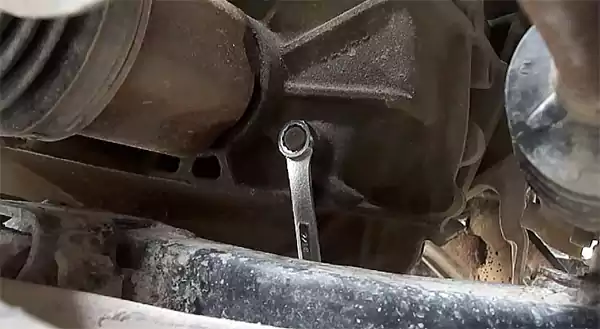
- Locate the inspection plug and loosen its grip first with a wrench before opening it up with a gloved hand. Don’t forget to put a container below to catch the dripping hot fluid, if any.
Note
Now, if the fluid flows out of the inspection plug, the transmission pan is already overfilled. Let it drain completely, as when it hits the right level, the drip will stop automatically. If it is dry and no fluid comes out, now proceed with the next step.
- Locate the fill plug (refer to the car’s manual) and remove it.
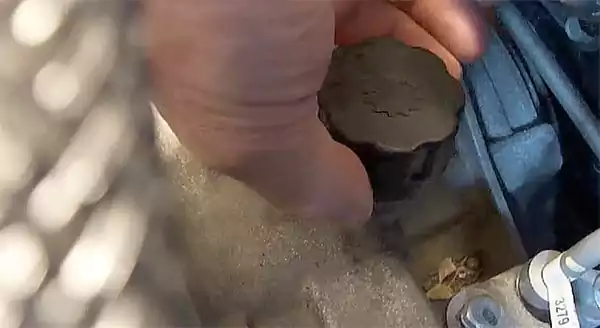
- Put a funnel into the fill hole and add fluid in small amounts. Do it until you notice that the fluid has started to come out of the inspection hole, shown in the second image below.
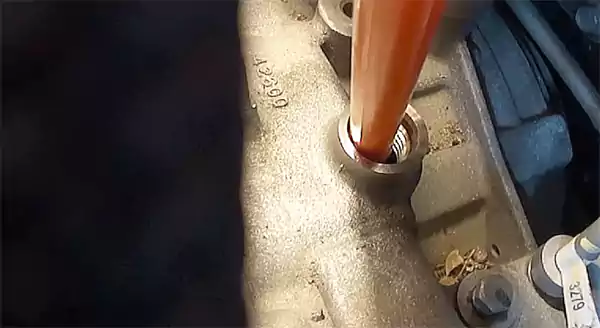

- At last, let the excess fluid completely drain out of the inspection plug. Once done, clean and unplug it. Note that you need to change the fluid if its color is dark brown.
If you own any one of the Toyota Venza models, including the 2021 Toyota RAV4, the fill plug is available attached to the transmission case.
3. Using the Dashboard or On-Board Diagnostics (OBD) System
The last method of checking transmission fluid level is through the OBD system. Is your car equipped with a smart infotainment system, also known as the onboard computer?
If yes, most probably you won’t find a dipstick under the hood to check the transmission fluid. You can do it digitally with the help of the onboard diagnostics facility. Follow the instructions below:
- Get a compatible OBD scanner handy.
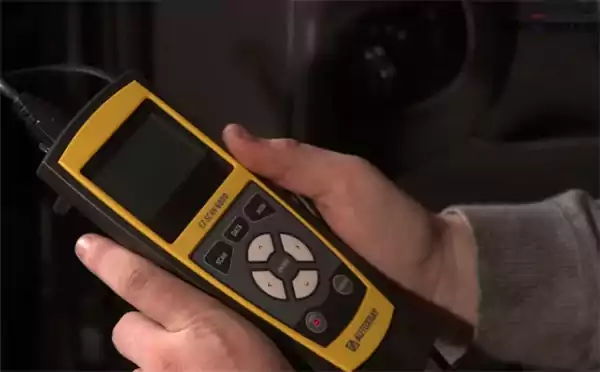
- Find your vehicle’s On-Board Diagnostics (OBD) port, typically found below the dashboard, or refer to the owner’s manual.
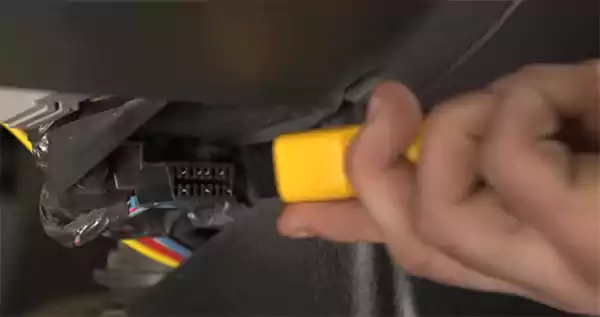
- Connect the scanner to the port to get the transmission fluid level checked for a reading.

Finally, see the level in the reading and proceed with adding the right type of fluid to the transmission pan. All scanners are different, so to use them effectively, you will have to consult the user manual for detailed instructions.
Also Read: How Many Volts is a Car Battery? Complete Guide with Everything Explained
How Do You Maintain Maximum Transmission Health?
To maintain the health of your transmission system, make sure you consider the following aspects.
- Frequency: Alone, this makes all the difference. Suppose you go for checking automatic transmission fluid only once a year when the manual instructs every 15 days with rigorous driving! In that case, will the once-a-year plan work? Absolutely not! Thus, always check the fluid level at the right interval as per the requirements.
- Additives: Before adding extra chemical formulas (transmission fluid additives) to the transmission, make sure that you check the potential harm in advance. Also, see if there are any compatibility issues or if your vehicle doesn’t support a particular brand. All has to be properly analyzed before use.
- Leaks: If your transmission pan asks for more fluid even though you just refilled it the other day, a leak is most probably the culprit. Check the suspected area properly or consult a mechanic for a complete assessment.
- Driving: The transmission is working better and lasting longer; it also comes down to the driving etiquette. Avoid rough or aggressive driving if possible, as it leads to overheating and premature wear.
With all that said, also pay attention to the specific instructions in the vehicle’s owner’s manual to keep the transmission in good condition.
Also Read: Car Wrap Cost Explained: What You Have to Pay For That Stunning Look?
Conclusion
So, that is how to check transmission fluid with and without a dipstick. If you are busy and cannot check the transmission fluid level yourself, make sure that you get it checked by a well-certified mechanic. And, don’t avoid signals or warnings if your vehicle has a smart dashboard. Schedule the maintenance on the weekend or any other day off. Some service centers are open 24 hours and 7 days a week—better to get it fixed on a veg-out day than to delay endlessly.
FAQs
1. Do you check transmission fluid with the engine running?
Ans: Yes, you have to keep the engine running. It helps warm up the transmission fluid, creating the right conditions to check the most accurate level. However, this also varies from car to car. Refer to your vehicle’s owner’s manual.
2. What is the proper way to check transmission fluid?
Ans: The proper way to check the transmission fluid depends on the method available. If your car has a dipstick, just take it out, wipe it clean, put it back into the tube, and then consider the reading. That is the proper way with a dipstick. For other methods, refer to the article.
3. Do you check your transmission fluid while it’s hot or cold?
Ans: It depends on your vehicle type. Generally, it is checked with an engine running because it allows the fluid to lose its viscosity, helping detect the right level. But, for sure, check the car manual.
4. Does a Nissan have to be running to check transmission fluid?
Ans: Yes, as is the case with most personal vehicles, Nissan also requires that the engine be running for an accurate transmission fluid check.