How long has it been since you changed the car oil? In case years have passed, you need to learn how to change oil in cars from a qualified source and take action immediately.
Changing oil is crucial for the high-performance and longevity of your automobile’s engine! Without this service, your car will break down earlier than its expected lifespan.
So, if you want your car to remain your lasting companion, check out the detailed process mentioned in the article and ensure that your car’s engine oil changing requirements are fulfilled at the proper time.
Essential Gear and Key Considerations Before Learning How to Change Oil in Cars
Before you get into how to change oil in cars, consider the following protective gear and essential tools you need to go through the entire process safely, like a pro! In short, you need:
1. Engine Oil
2. Filter
3. Ratchet & Socket Set
4. Funnel
5. Oil Capture Container
6. Jack with Jack Stands
7. Ramps
8. Rags for Cleanup
9. Gloves
10. Safety Glasses
| S. No. | Gear | Images | Explanation |
| 1. | Engine Oil | 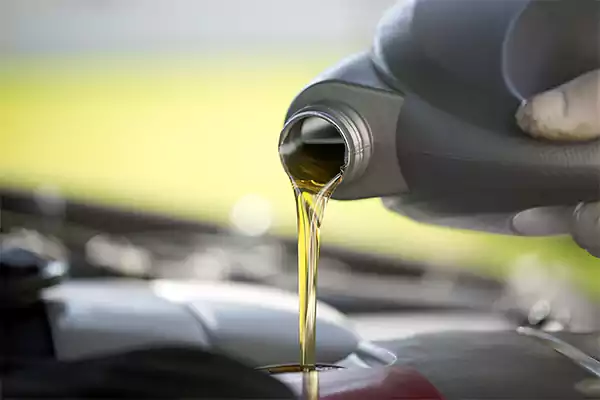 | Always choose the oil that is required for your car. The information in this regard can be particularly found in the user manual. Don’t put any oil in your car engine unless you know about the right one. |
| 2. | Filter | 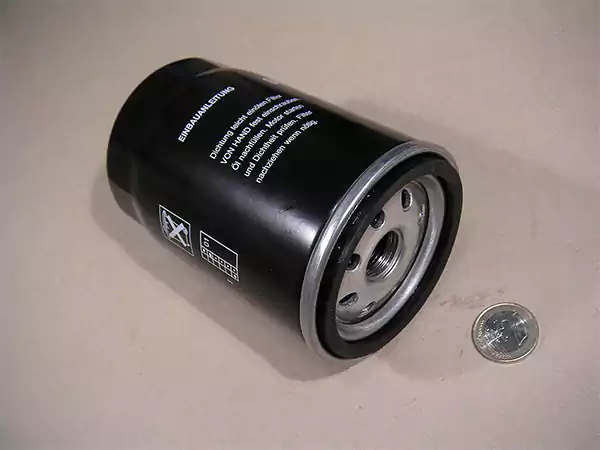 | This equipment also has to be arranged as per the specifications of your vehicles; otherwise, compatibility issues prevail. |
| 3. | Ratchet & Socket Set | 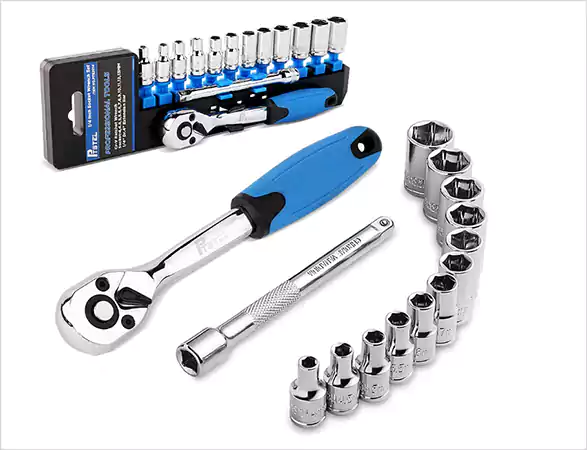 | These tools are a must to comfortably loosen the grip of years-old, screwed nuts and bolts. |
| 4. | Funnel |  | This tool allows you to pour the new oil inside the engine without spilling a drop over other components, promoting minimal wastage. |
| 5. | Oil Capture Container |  | This container will capture all the oil that will come rushing out from the oil drain pan and filter during the process. |
| 6. | Jack with Jack Stands |  | Both are important to stabilize the car at an elevated height to make enough room inside to access the oil drain pan and filter. |
| 7. | Ramps | 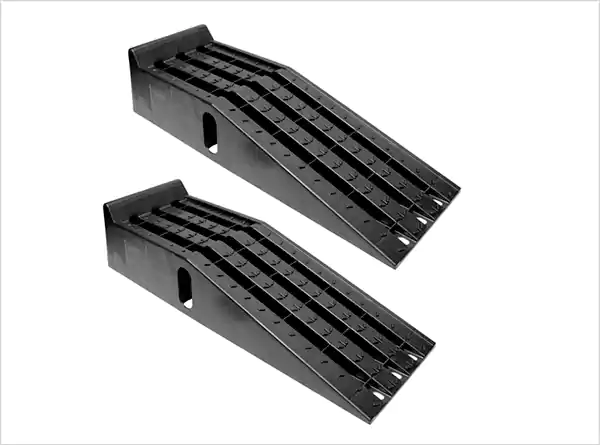 | If you are not using a jack and jack stands, ramps can be used alternatively. |
| 8. | Rags for Cleanup | 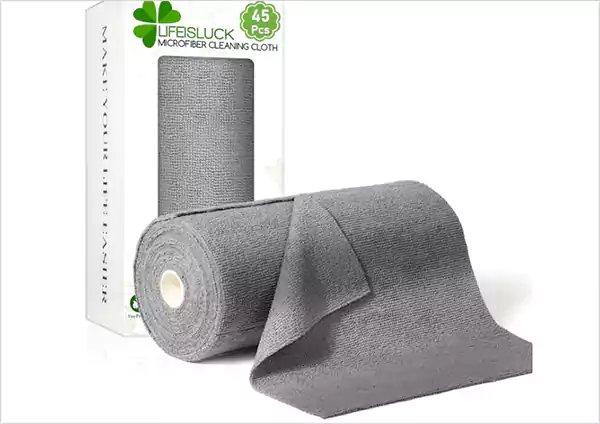 | Changing oil in cars can be quite messy. So, you need something to clean the smeared area or to make a firm grip on the tool you are using. |
| 9. | Gloves |  | These gloves will protect your hands and help you stay clean while removing the oil from the drain pan and the filter. |
| 10. | Safety Glasses | 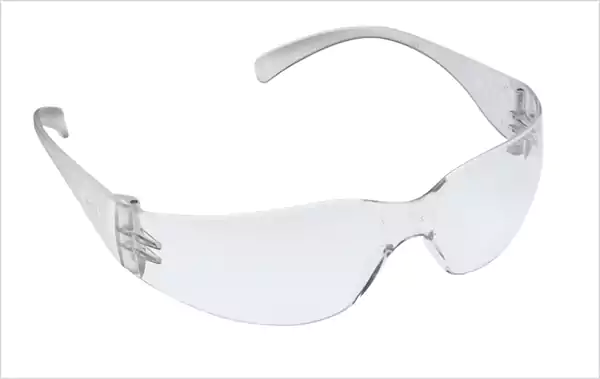 | While changing the car oil, you will be under the vehicle. So, a protective pair of glasses is crucial to keep your eyes protected from stray debris that might fall right into any of your eyes when you remove the car parts. |
Precautions:
- Always wear gloves and eyeglasses to keep no contact with the oil during the process.
- All tools mentioned above must be of good quality, i.e., a low-quality or fragile jack stand can break and collapse while you are under the car, causing life-threatening injuries; thus, always invest in a good jack and jack stands. The same also follows for your gloves and eyeglasses.
- If your vehicle engine has just been turned off, don’t work on changing the car oil instantly, as the oil will be hot from the engine heat. Wait and allow the car to cool down completely before stepping in.
These are the three most essential considerations not to miss out on, as they are for your own safety. At any stage, if you face any complications, don’t hesitate to call a professional car mechanic.
Also Read: Most Reliable Used Cars in 2025: Top Models That Last for Years
When Should One Change Oil in a Car?
Most importantly, before you ask how to change oil in the car, open your vehicle’s user manual, where all the instructions and specifications are listed, and see when you need to do it first of all.
The frequency varies from car to car, depending on the engine, internal parts, used value, etc. Generally, an old automobile requires a change of oil every 3,000 miles. However, that number reaches anywhere from 5,000 to 7,500 miles in the case of a new car.
However, before an oil change, learn specifically whether it is time for your vehicle or if you still have some time left.
Also Read: How to Disconnect Car Battery? Learn About the Entire Process in No Time!
How to Change Oil in Cars Without Causing Any Trouble?
This section eventually helps you learn how to do oil change in your personal vehicle. The major stages are elaborately discussed below. At a glance, these are:
- Lifting the vehicle
- Locating the oil drain pan and the filter
- Draining the old oil
- Replacing the old oil filter and
- Adding new oil to the engine
1. Lift the Vehicle
The first step is to lift your car up with the help of a jack, gradually with care and precision.
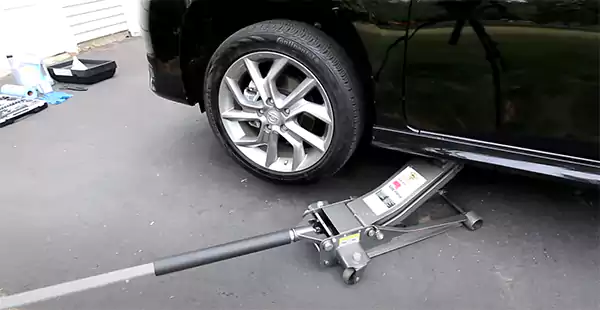
Once your car is lifted enough to accommodate you inside, place a jack stand to stabilize the vehicle at that particular height, as shown below.
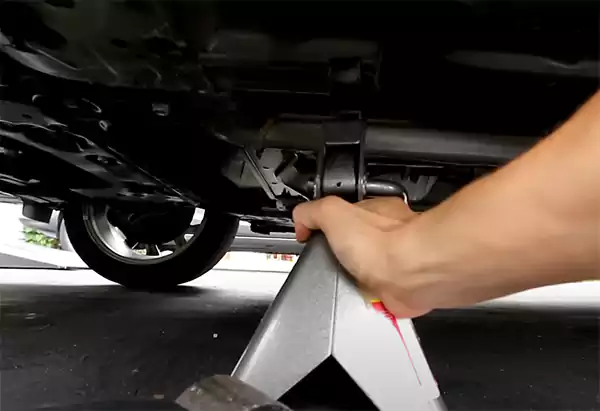
Well, if you need to jack up a car on an incline, it might be tricky, especially for people doing it for the first time. In that case, ruckFIAA was advised perfectly by terroristteddy on Reddit, as provided below.

Terroristteddy suggests:
- Putting the wheel blockers on the side not being lifted
- Checking the stability of the car once jacked up by shaking it physically
- Using a second car, if available, as an ultimate stopper to prevent the lifted car from rolling down.
Wheel blockers provide outstanding support on inclined surfaces, and they come cheaply as well. You can buy them from any online store.
2. Locate the Oil Drain Pan and Filter
Once your car is up in the air at the right height, move on to the next step. Find the drain pan and the filter. They are usually located close to each other, as shown below.
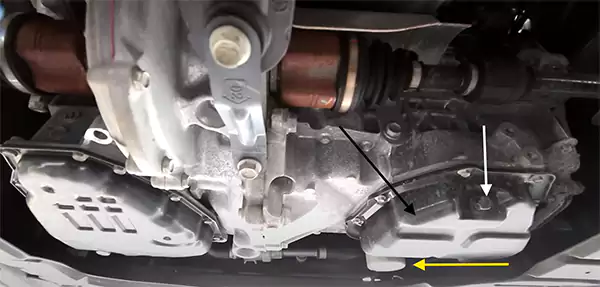
Locating them is crucial in learning how to do an oil change.
The black arrow in the image above locates the oil drain pan, where the white arrow indicates the drain plug—the bolt that you need to loosen and turn off to get the old oil out of the system.
The yellow arrow behind the oil drain pan points to the oil filter.
Note
On the left-hand side, there is the same structure as the oil drain pan, but it doesn’t have a drain plug. This component is called the transmission drain pan. So, don’t confuse it with the oil drain pan.

Some vehicles don’t have an oil filter below, besides the drain pan, but under the hood, allowing easy accessibility. You just need to open it, and you will find it right there, as highlighted in the screenshot above.
3. Drain the Old Oil
Once the pan and the filter are discovered, next you need to get the oil out of the drain pan. Doing so is just a matter of turning off the drain plug, as the old oil will automatically come out of the container afterward.
I. Take a ratchet and loosen the grip of the drain plug.
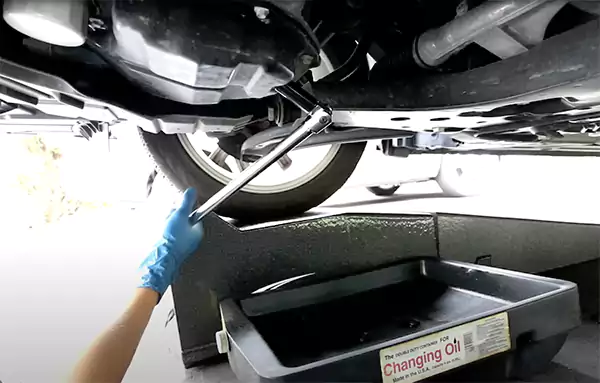
II. Turn it off by a properly gloved hand once the grip has been eased.

III. Carefully take it off and let the old oil flow down, draining the pan completely. (Ensure that you have already placed the oil capture container below.)
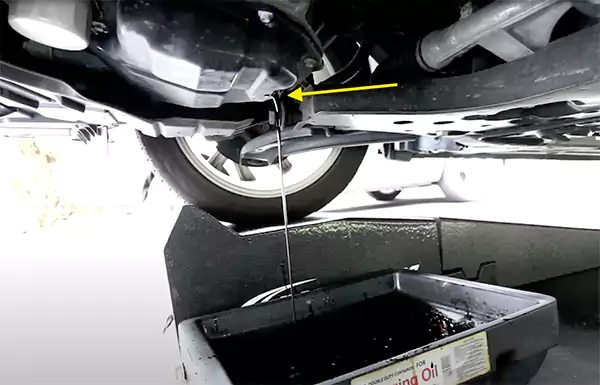
IV. Put the oil drain plug back in its place and screw it tightly once all the oil has come out.

Note
Never mix this oil out of the drain pan with the new oil to put it back into the system. It is to be discarded. The best you can do is to give the used motor oil to a recycling center.
4. Replace the Old Oil Filter
Now, this section takes you to the next step and elaborates on “How do you change the oil filter?” Follow the simple steps below to change your new filter in no time.
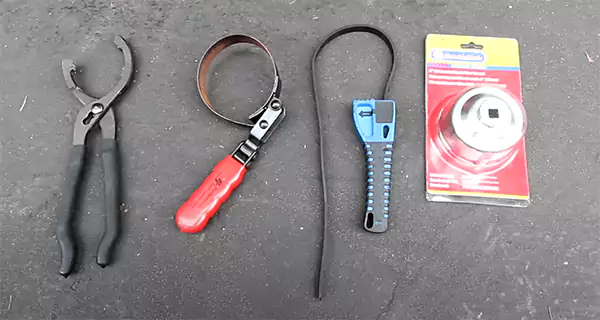
I. Select any one of the following oil-filter wrenches that fits your old filter well.
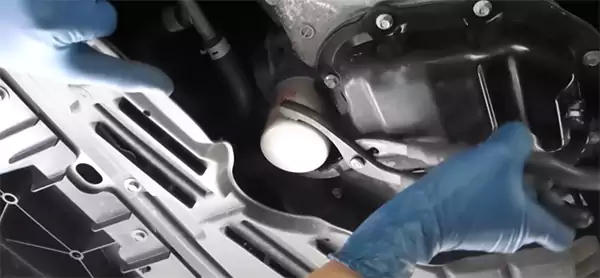
II. Take the wrench and break the grip of the old filter.
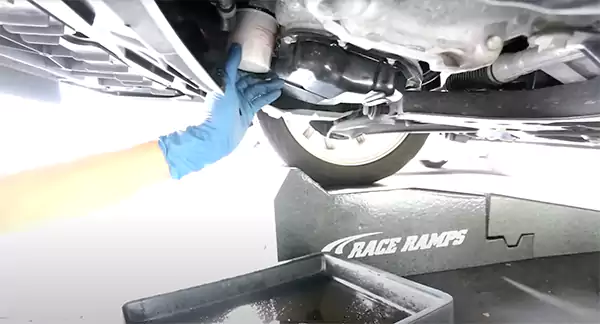
III. Once it has become loose, place the oil capture container below and gently turn the old filter off with your hand. Be careful, as it allows the trapped oil to rush down.
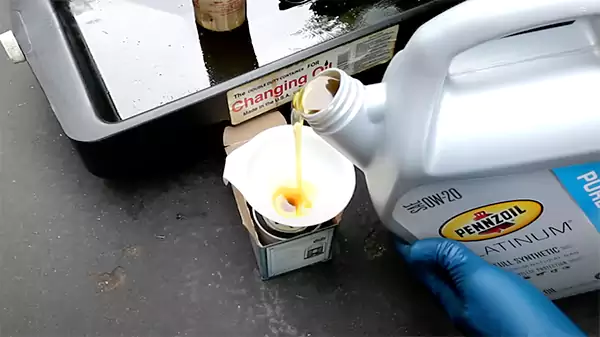
IV. Now, take the new filter and pour sufficient oil into it.
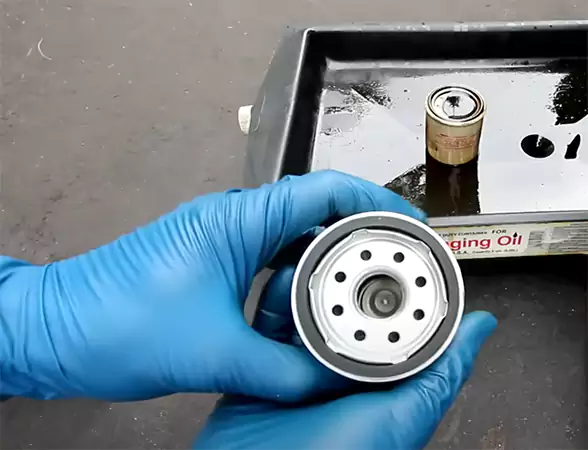
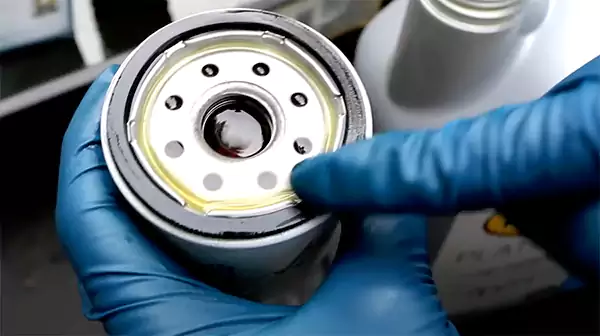
V. Dip a finger inside the oil and run it across the rim of the new filter to make it well-lubricated.
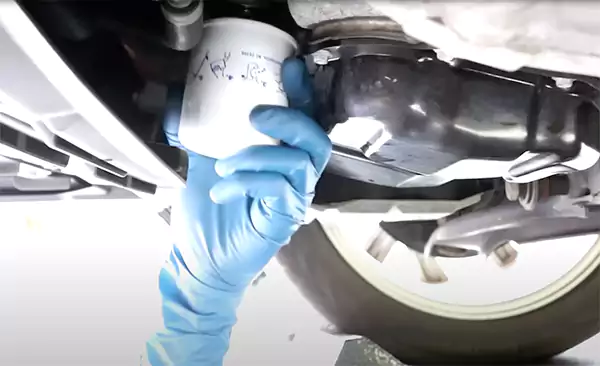
VI. Now, take the new filter to the mount and gently turn it on. Don’t push it over or rush the process. The filter will get along very easily if you do it right.
Note
If the new filter feels oily due to the spilled oil over its body, use a spare piece of cloth or tissue paper to wipe it clean and then screw it gently until it is tightly fixed.
Many people, during the process, forget to change the filter while they have already changed the oil. In that case, get it replaced as soon as possible, as it will invalidate the whole purpose of an oil change. Your new oil will get mixed with the old and clogged filter, impacting the car’s overall performance.
Note
Don’t use the oil from this old filter. If possible, you can deliver it to a recycling unit nearby.
5. Add New Oil to the Engine
At last, we have come to the final stage of the process, which is adding oil to the engine.
Locate the engine under the hood and fill it properly as per the requirements, and while making the measurement, don’t forget to consider the oil you have already added to the oil filter.
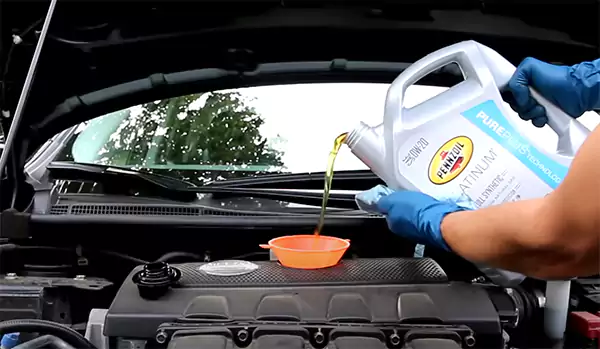
Once that’s done, jack down your car and remove the stands or any other stabilizers carefully. Afterwards, check how the vehicle is functioning. Keep the engine on for 4 to 5 minutes so that it gets the oil settled into the system well. Or, if possible, you can go for a drive as well.
Also Read: How Much Does it Cost to Paint a Car? A Complete Guide for Budget-Friendly Finishes
Conclusion
This is how to change oil in cars—NOT THAT CHALLENGING, RIGHT! Although even with such an elaborate guide, many beginners forget things and make mistakes, for instance, completing the car oil change process without replacing the old oil filter, as covered above. Thus, before you take any action, prepare a checklist, include all major steps, and then carefully conduct each aspect with deliberate thought and precision.
Read Next: Car Suspension Explained: Types, Parts & How It Works
FAQs
1. Can I just add oil to my car?
Ans: If you mean only adding new oil after emptying the oil drain pan without changing the old oil filter, don’t do that. There is no point in doing so, as it will make the entire purpose worthless. Always change oil with the filter for maximum engine performance and strength.
2. Is $100 for an oil change normal?
Ans: Yes, a $100 oil change is normal if it includes the use of high-quality synthetic oil, new filters, and other additional charges as per the requirements. Furthermore, don’t consider service from a particular provider unless you have analyzed quotations from major brands. It will help learn about reasonable rates in the market.
3. Can a beginner do an oil change?
Ans: Yes, a beginner can change the car oil if they follow each step in this support material carefully with accurately. It doesn’t require a lot of technicality.