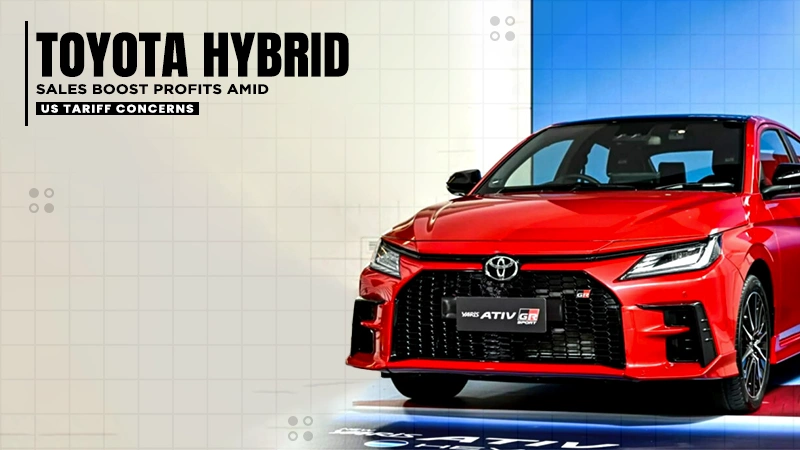
The decision made by Toyota to invest heavily in hybrids seems to have resulted in a positive outcome, as the automaker disclosed an increase in sales globally and claimed that its hybrids are among the most preferred ones in key markets.
At the same time, the manufacturer is concerned about the increasing tariff burden and its consequences on the production process, pricing, and ultimately, the company’s profitability.

It has already affected Toyota’s North American operations and thus has triggered further fears about the existence of ongoing cost pressures. The strategy followed by the company,
which is one of the industry analysts’ forecasts, is contrary to that of many rivals who are trying to be wholly EVs (electric vehicles) as fast as possible. Toyota’s hybrid strategy gives the company a stronghold in terms of margins as well as the agility to move into areas where EV infrastructure is still in development.

However, the company does not get rid of macro risks as currency fluctuations, growing trade tensions, and the gradual acceptance of EVs, all loom in the background. Toyota’s profit target for the full year is slightly up despite possible loss from tariffs.
Hybrid vehicles are slowly gaining acceptance and are providing the firm with a way to pass the cost barrier. Even though it has been predicted that Toyota’s profits will be impacted by tariff losses, the company still hopes for strong sales and demand.
Read Also: Toyota Urban Cruiser Hyryder: Hybrid Soul in SUV Skin (Specs Decoded)
To put it simply, Toyota Corporation is balancing two forces that are opposite to each other: the increased consumer interest in hybrids, which helps to sustain the company’s revenue and margin and the tariffs and global trade friction, which threaten to decrease profit. The extent of this hybrid cushion in the future will depend on how effectively Toyota deals with production localization, cost control, and the electrification strategy.